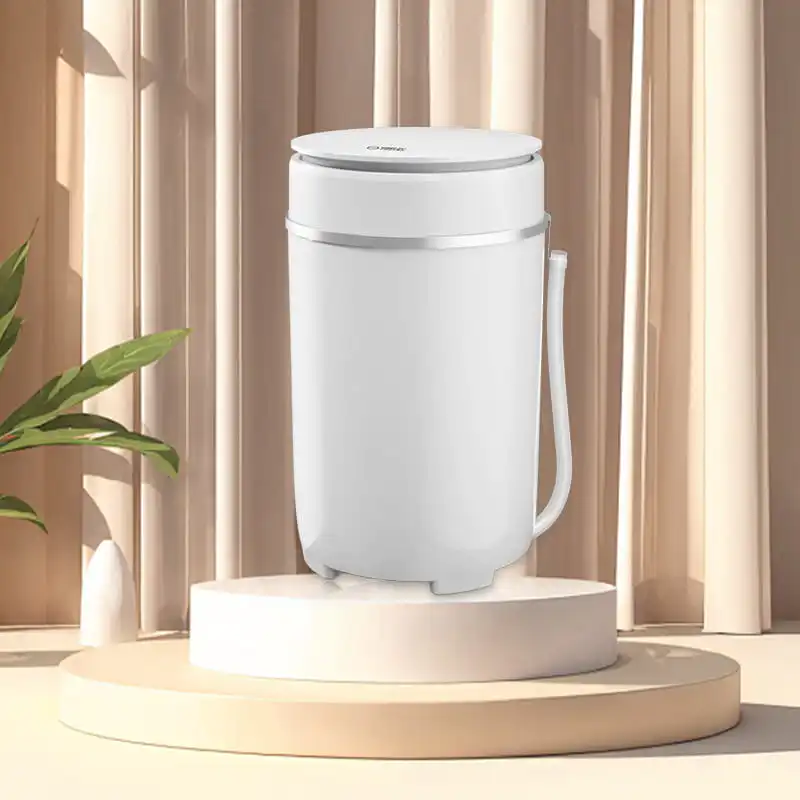
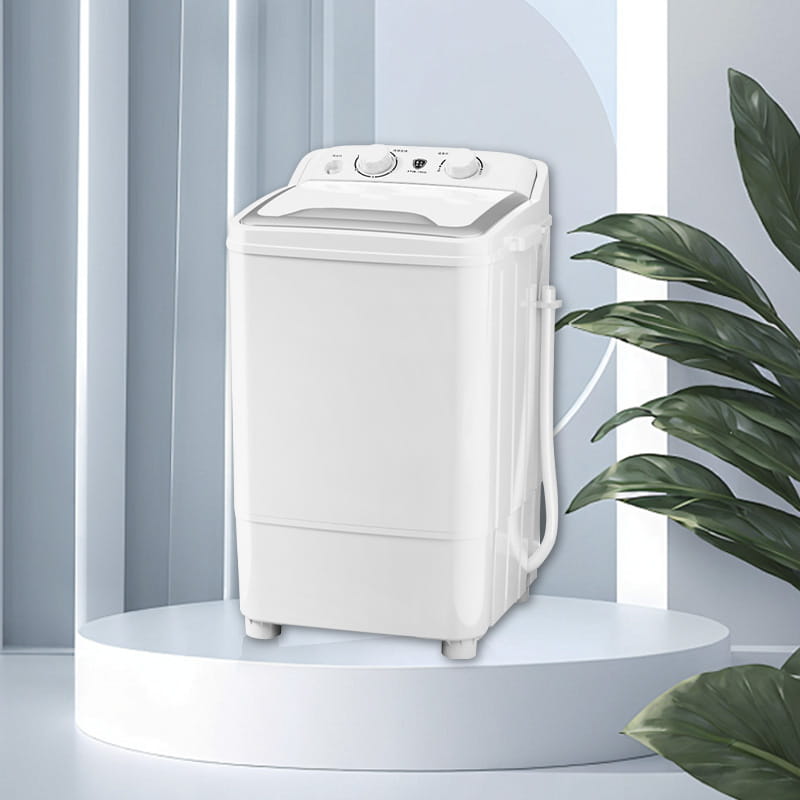
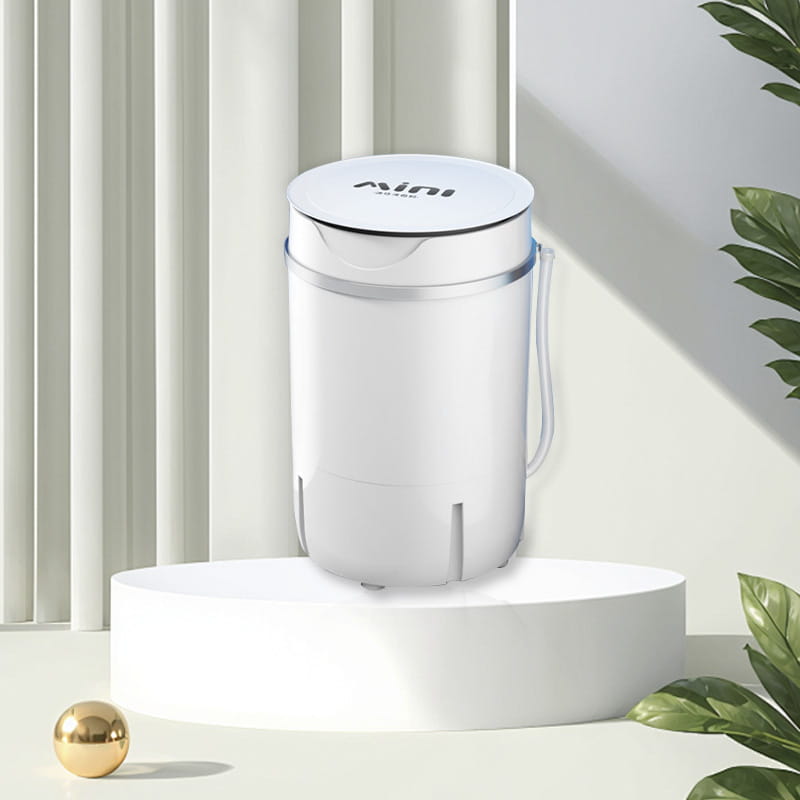
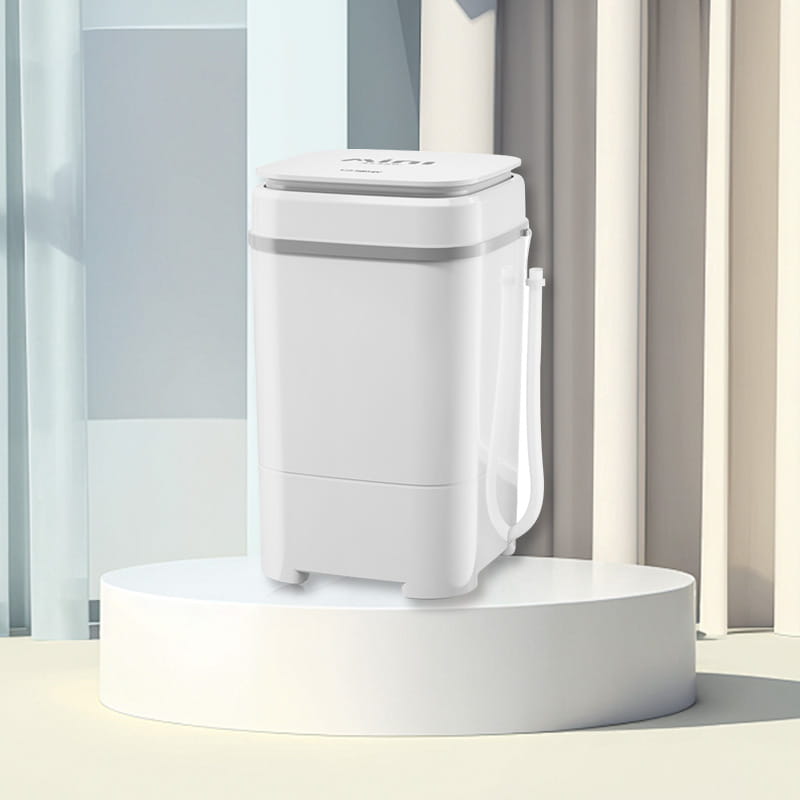
Installieren Sie eines Kompakte Waschmaschine ist wirklich unkompliziert – die meisten Benutzer schließen die Einrichtung in weniger als 15 Minuten ohne Werkzeug ab. Im Gegensatz zu Geräten in voller Größe, die permanente Wasseranschlüsse und spezielle Waschräume ermöglichen, a Tragbare Waschmaschine Lässt sich an einen Stundardhahn anschließen, in ein Waschbecken oder einen Eimer ablassen und bei Nichtgebrauch flach verstauen. Bei Schlafsälen, Wohnmobilen, Campingausflügen und kleinen Wohnungen kommt es auf diese Einfachheit an: Sie erhalten saubere Kleidung, wo immer Sie sind, ohne permanente Infrastruktur.
Stirb 30–75 kg quadratische halbautomatische energiesparende kompakte Mini-Waschmaschine (Modell XP30-75KG) erweitert diesen Komfodert mit einem seitlichen Tragegriff, einem Netzkabel-Aufwickelgestell auf der Rückseite, einer Nennleistung von nur 300 W und einer kompakten Stellfläche von 405 x 410 x 640 mm – klein genug, um auf einen Balkon, in eine Badezimmerecke oder in einen Stauraum für Wohnmobile zu passen. Stirbser Leitfaden führt Sie durch alles, was Sie wissen müssen: Installationsschritte, technische Spezifikationen, Reinigungstechnologie und für wen dieses Produkt konzipiert ist.
Stirb installation process for this Kompakte Waschmaschine für Wohnheime Es folgt ein einfacher Ablauf, der keinen Klempner, keine Bohrmaschine und keine dauerhafte Änderung Ihres Raums erfordert. Das halbautomatische Design bedeutet, dass Wassereinlass und -auslass bei jedem Zyklus manuell gehundhabt werden – eine geringfügige Anpassung gegenüber einer vollautomatischen Maschine, die große Vorteile in Bezug auf Flexibilität und Tragbarkeit bietet.
Stirb Tragbare Waschmaschine für Wohnungen Stirb Designphilosophie legt Wert auf Reversibilität – jeder Installationsschritt ist in Sekundenschnelle rückgängig zu machen. Dies macht es ideal für Mietobjekte, in denen dauerhafte Änderungen verboten sind, und für Wohngemeinschaften wie Wohnheime, in denen die Geräte am Ende jeder Mietperiode mit dem Bewohner mitziehen.
Stirb bar chart compares setup time across five installation stages for a compact portable washer versus a full-size residential washing machine. The total setup time for the compact Waschmaschine im Wohnheim beträgt etwa 11 Minuten von Ende zu Ende – im Vergleich zu über 120 Minuten (inklusive Klempnerplanung) für eine Maschine voller Größe, die permanente Wasser- und Abflussanschlüsse benötigt. Der Schritt zum Wasseranschluss zeigt den dramatischsten Kontrast: Der Anschluss eines Wasserhahnadapters dauert zwei Minuten, ein Wasseranschluss erfordert jedoch oft einen professionellen Besuch. In ähnlicher Weise verringerte sich die Installation des Abflusses von einer 45-minütigen Installationsarbeit auf eine 1-minütige Schlauchverlegung. Die erste Ladebereitschaftszeit von 5 Minuten für die kompakte Maschine – im Vergleich zu 90 Minuten, um sicherzustellen, dass alle Verbindungen abgedichtet und getestet sind für eine Maschine in voller Größe – unterstreicht, warum dieses Produkt für Mieter, Studenten und Reisende attraktiv ist, die es sich nicht leisten können, zu warten oder für Installationsdienste auszugeben. Für diejenigen, die in Wohnungen oder Wohnheimen wohnen oder die Maschine auf Wohnmobil- oder Campingausflügen mitnehmen, ist diese einfache Installation ein grundlegender Vorteil für die Lebensqualität.
Das Richtige wählen Kompakte Wasch-Trockner-Kombination Für eine eigenständige Kompaktwaschmaschine ist es erforderlich, dass die technischen Spezifikationen an Ihr tatsächliches Nutzungsverhalten angepasst werden. Die folgende Tabelle enthält die vollständigen Spezifikationen des XP30-75KG-Modells mit einer praktischen Interpretation der einzelnen Parameter.
| Vollständige technische Spezifikationen für die kompakte halbautomatische Waschmaschine XP30-75KG | ||
| Parameter | Wert | Praktische Implikation |
| Produktmodell | XP30-75KG | Halbautomatische Kompaktwaschanlage mit einem Durchgang |
| Nennleistung | 300W | Geringer Energieverbrauch – Betrieb an Standardsteckdosen, geeignet für Wohnmobil- und Campinggeneratoren |
| Wasserkapazität | 7,5 kg | Bewältigt die Wäsche einer ganzen Woche für eine Person in einem einzigen Zyklus |
| Nennspannung | 220V ~ 50Hz | In den meisten Ländern mit dem Standard-Haushaltsstrom kompatibel |
| Wasserdichter Grad | IPX4 | Geschützt gegen Spritzwasser aus allen Richtungen – sicher im Badezimmer und im Freien |
| Produktgröße | 405 x 410 x 640 mm | Passiert unter den meisten Dieken, in Wohnmobilbuchten und neben Wohnheimmöbeln |
| Schnellwaschgang | 15 Minuten | Vollständige Waschsimulation – Ringen, Kneten, Reiben, Spülen – in einem einzigen kurzen Zyklus |
| Kontrolltyp | Drucktastenfeld | Zugänglich für ältere Benutzer, Kinder und Personen, die mit komplexen Geräteschnittstellen nicht vertraut sind |
Stirb 300 W Nennleistung Es ist besondere Aufmerksamkeit für Käufer wert, die stirbt als ... verwenden möchten Wohnmobil-Waschmaschine or Campingwaschmaschine . Mit 300 W verbraucht das Gerät weniger Strom als ein Haartrockner und liegt weit innerhalb der Kapazität der meisten tragbaren Generatoren und Landstromanschlüsse für Wohnmobile. Bei einem normalen 30-minütigen Waschgang beträgt der Gesamtenergieverbrauch etwa 0,15 kWh – ein Wert, der dies zu einem echten Vorteil macht energiesparende Kompaktwaschmaschine Durch jede praktische Maßnahme und eine, die die Attraktivität des Produkts als umweltfreundliche Wahl für Vielreisende und auf Nachhaltigkeit ausgerichtete Haushalte unterstützt.
Stirbs kompakter Waschtrockner Stirb Produktlinie umfasst zwei Reinigungstechnologien, die sie von einfachen Mini-Waschmaschinen unterscheiden: eine antibakterielle Blaulichtbehandlung und einen Schmetterlings-Bionic-Wave-Wheel-Mechanismus. Beide befassen sich mit spezifischen Reinigungseinschränkungen, mit denen kleinformatige Waschmaschinen häufig konfrontiert sind – unzureichende Bakterienbeseitigung und unzureichende mechanische Rührtiefe.
Stirb blue light antibacterial function applies a low-intensity blue-spectrum light treatment during the wash cycle. This addresses bacteria that survive standard cold-water washing — a particular concern for baby clothes, underwear, and items worn during high-activity periods. The blue light treatment is effective at eliminating surface bacteria without requiring hot water (which would increase energy consumption) or chemical additives (which can irritate sensitive skin). For parents washing infant clothing, this feature provides an additional layer of hygiene assurance beyond what detergent alone delivers in a short cold-water cycle.
Stirb butterfly wave wheel design — modelled on natural water movement patterns — operates in both clockwise and counter-clockwise directions during the wash cycle. This bidirectional agitation mimics the hand-washing motion of alternating push-and-pull, reaching fabric areas that a unidirectional wave wheel leaves undertreated. The bionic design means that even in a Mini-Waschmaschine Mit einer kompakten Trommel ist die mechanische Reinigungswirkung umfassend: Die Wäsche schleudert und bewegt sich aus allen Winkeln und löst dabei festsitzenden Schmutz aus den Fasern, anstatt lediglich oberflächlichen Schmutz durch das Wasser zu zirkulieren. Der 15-minütige Schnellwaschzyklus ist speziell darauf abgestimmt, die gesamte bionische Rührsequenz abzuschließen – er simuliert die Schritte des Ringens, Knetens, Reibens, Spülens und Abtropfens des manuellen Waschens innerhalb einer Viertelstunde.
Stirb line chart compares energy consumption per wash cycle across six wash program types for the 300W compact washer versus a standard full-size 2000W machine. The compact washer (solid blue line) stays near the bottom of the chart throughout — consuming just 0.075 kWh in the 15-minute quick cycle and reaching a maximum of approximately 0.25 kWh even on a full program. The full-size machine (dashed light blue line) starts at 0.4 kWh for the simplest cold cycle and climbs to 2.0 kWh under heavy load with heated water — more than eight times the compact washer's consumption. Over a year of weekly use (52 cycles at the standard program), the difference amounts to roughly 90 kWh saved annually — a meaningful reduction in both electricity cost and carbon footprint. For Wohnmobil-Waschmaschine and Campingwaschmaschine Für Benutzer, die auf Generatoren oder Solarenergie angewiesen sind, ist diese Energiesparsamkeit nicht nur wirtschaftlich, sondern ermöglicht auch den Betrieb in Szenarien, in denen eine Maschine in voller Größe einfach unpraktisch wäre. Das Energieeffizienzprofil davon energiesparende Kompaktwaschmaschine Macht es zu einer verantwortungsvollen Wahl für umweltbewusste Haushalte und zu einer praktischen Notwendigkeit für ein netzunabhängiges Leben.
Stirb design specification of the XP30-75KG maps directly to six distinct user profiles — each with specific requirements that the product addresses through deliberate engineering choices rather than generic versatility claims.
A Waschmaschine im Wohnheim Sie müssen in einem Raum mit begrenzter Grundfläche, ohne feste Sanitäranlagen und mit Zugang zum Gemeinschaftsbad arbeiten. Mit einer Größe von 405 x 410 x 640 mm passt diese Maschine neben einen Kleiderschrank im Wohnheim oder unter ein Hochbett. Die Druckknopfsteuerung und der 15-Minuten-Schnellzyklus passen sich dem unter Zeitdruck stehenden Studentenalltag an, und das Netzkabel-Aufwickelgestell auf der Rückseite sorgt dafür, dass das Gerät bei Nichtgebrauch ordnungsgemäß verstaut werden kann, ohne dass die Gefahr eines Kabelsalats besteht.
In vielen städtischen Einzimmerwohnungen und älteren Wohngebäuden fehlt die Sanitärausstattung für eine vollwertige Waschmaschine. Stirb Tragbare Waschmaschine für Wohnungen Das Modell lässt sich ohne Modifikation an einen Küchen- oder Badezimmerhahn anschließen, läuft in einem Waschbecken ab und kann bei Nichtgebrauch in einem Schrank aufbewahrt werden. Das Fassungsvermögen von 7,5 kg bewältigt umfangreiche Wäscheladungen – nicht nur Feinwäsche – und ist damit eine echte Alternative zu Gemeinschaftswaschsalons für Bewohner, die das Waschen lieber zu Hause bevorzugen.
Stirb IPX4 waterproof rating and 300W low power draw make this a viable Wohnmobil-Waschmaschine and Campingwaschmaschine . Der seitliche Tragegriff ermöglicht einen einfachen Transport zwischen Fahrzeug, Campingplatz und Wasserquelle. Bei längeren Autofahrten oder beim Wohnen im Wohnmobil, bei denen der Zugang zum Waschsalon nur zeitweise möglich ist, verbessert sich die Möglichkeit, Kleidung auf dem Campingplatz zu waschen, den Reisekomfort und verringert die Abhängigkeit von geplanten Stopps in Einrichtungen, die möglicherweise abgelegen oder überfüllt sind.
Stirb blue light antibacterial system addresses a specific concern for parents: the risk of bacterial survival on infant clothing after washing at lower temperatures. By combining efficient mechanical cleaning with blue light treatment, the machine provides an additional hygienic layer for baby garments without requiring hot washing cycles that can damage delicate fabrics. The built-in leaching basket enables gentle spin-draining of baby clothes — a more delicate option than standard high-speed dehydration, which can stress small garment fibres.
Stirb radar chart delivers a clear visual summary of the compact mini washer's advantages versus a full-size machine. The Kompakte Waschmaschine (dunkelblaues, durchgezogenes Polygon) reicht bis zur äußeren Grenze der Tabelle zu Tragbarkeit und einfacher Installation – beide mit 10 Punkten – was die grundlegende Designpriorität dieser Produktkategorie widerspiegelt. Energieeinsparung und schnelle Waschgeschwindigkeit erzielen beide einen Wert von 9,5, was mit den an einer anderen Stelle in diesem Artikel gezeigten Daten zur Leistungsaufnahme von 300 W und zum 15-Minuten-Zyklus übereinstimmt. Die Hygienefunktionen werden mit 9,5 Punkten bewertet und spiegeln das antibakterielle Blaulichtsystem wider, das bei Geräten in Standardgröße normalerweise nicht standardmäßig enthalten ist. Das Gerät in voller Größe (gestricheltes Polygon) fällt in Punkt Tragbarkeit und Installationsfreundlichkeit in die Mitte zurück – es erhält in beiden Punkten etwa 2 Punkte –, führt aber in Punkt Kapazität und Programmumfang, die hier nicht dargestellt sind, an. Die Geräuschpegel sind nahezu identisch: Der geräuschreduzierende Motor der Kompaktwaschmaschine erreicht eine Bewertung von 9,0 und bestätigt damit, dass der geräuscharme Betrieb nicht auf Kosten der Kompaktheit geht. Das gesamte Radarprofil macht deutlich, dass die kleine Wohnung, Waschmaschine und Trockner Stirb Kategorie erfüllt wirklich unterschiedliche Benutzeranforderungen – keine Kompromissversion einer vollwertigen Wäscherei, sondern eine speziell entwickelte Lösung für Situationen, in denen Tragbarkeit, Geschwindigkeit und einfache Installation am wichtigsten sind.
Eine der weniger diskutierten, aber praktisch wichtigen Spezifikationen hierfür Mini-Waschmaschine ist sein geräuschreduzierender Motor. In Wohngemeinschaften – Wohnheimen, Mehrfamilienhäusern, dünnwandigen Wohngemeinschaften – ist der Lärm von Waschmaschinen eine häufige Ursache für Spannungen zwischen Nachbarn und eine praktische Einschränkung, wann Wäsche gewaschen werden kann. Eine Maschine, die um 3 Uhr morgens läuft, weil dies die einzige freie Zeit in einem vollen Terminkalender ist, wird zum Problem, wenn sie die für viele preisgünstige Kompaktwaschmaschinen typische Ausgangsleistung von 70–80 dB erzeugt.
Stirb noise reduction motor in this product uses high-quality mechanical components and smooth overall design to reduce vibration transmission to the machine casing. Even at high spin speeds for the leaching/drain function, the motor operates without the mechanical resonance that causes conventional washers to vibrate against flooring and transmit noise through building structures. The product description characterises this as "light sound washing" — inner surging, outside steady as a clock — which reflects the engineering goal of decoupling the internal mechanical energy from the external acoustic output. For RV users, this also means the machine can run inside the vehicle without creating uncomfortable noise levels in the confined cabin space.
Stirb column chart shows adoption and satisfaction rates across five primary user groups for compact portable washers. Students and dorm residents lead with 91%, confirming that the combination of portability, quick wash cycle, and no-install operation is most strongly valued in student living contexts where laundry logistics are a daily practical challenge. Small apartment residents follow at 87%, driven by the freedom from laundromat dependence and the ability to do laundry on their own schedule without leaving home. Parents washing baby clothes score 82%, reflecting the growing market demand for dedicated small-format washers that offer superior hygiene features for infant garments. RV and camping users score 74%, a figure that is growing as more households adopt extended travel lifestyles and seek appliance solutions that keep pace with their mobility. Elderly users score 68%, driven by the push-button simplicity and light-sound operation that make the machine comfortable to use for those with limited technical confidence or hearing sensitivity. The data collectively confirms that the kompakter Waschtrockner Kategorie bedient eine breite und vielfältige Benutzerbasis – nicht eine einzelne Nische – und dass der Funktionsumfang des Produkts auf die spezifischen Bedürfnisse jeder Gruppe abgestimmt ist, anstatt nur eine von ihnen auf Kosten anderer zu bedienen.
Cixi Yongda Electronics Co., Ltd. hat seinen Sitz in Cixi, Ningbo, Zhejiang, China – eine Stadt, die als führender Standort für die Herstellung kleiner Haushaltsgeräte gilt. Das Werk ist von einer vollständig integrierten Industriekette unterstützt und bietet eine starke Wettbewerbsgrundlage für Produktqualität, Kosteneffizienz und Lieferzuverlässigkeit.
Gegründet in 2003 , Yongda hat mehr als 20 Jahre Erfahrung in der Herstellung bei Haushaltsgeräten, mit einem Jahresumsatz von über 30 % 100 Millionen RMB . Die Produkte des Unternehmens haben sowohl auf dem nationalen als auch auf dem internationalen Markt eine ausgereifte, stabile Qualität mit einem guten Preis-Leistungs-Verhältnis erreicht. Der Außenhandelsumsatz beträgt mehr als 50 % der Fabrikproduktion Stirb Produkte werden derzeit in zahlreiche Länder weltweit exportiert. Die Verpackung ist speziell auf die Behältergrößen abgestimmt und ermöglicht eine effiziente internationale Logistik.
Stirb factory's internal staff structure is adjusted to handle the requirements of diverse customer types — from large retail buyers to customised OEM orders — with rapid delivery times. The factory is located only 35 Kilometer vom Hafen Beilun entfernt , bietet eine hervorragende logistische Positionierung für Exportsendungen und wettbewerbsfähige Lieferzeiten für internationale Käufer, die a Kompakte Waschmaschine für Wohnheime , Tragbare Waschmaschine oder jedes andere Produkt aus dem Sortiment.